
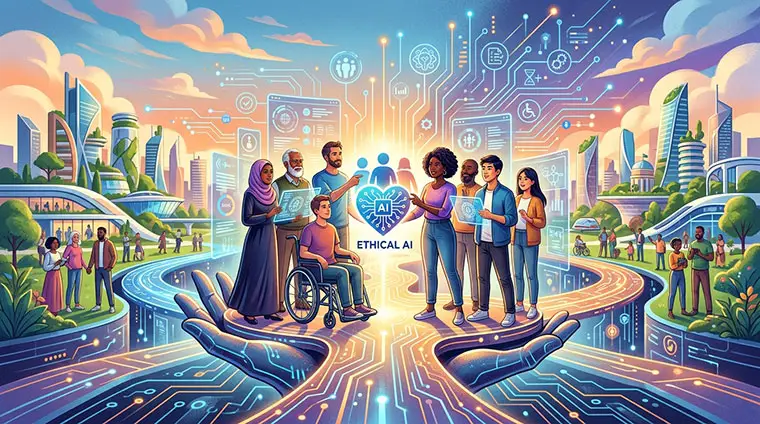
The Imperative of Ethical AI: Building an Inclusive Future
As artificial intelligence continues to reshape our enterprise landscapes, the conversation must shift from mere capability to profound responsibility. Inclusion isn’t just a buzzword; it’s the cornerstone of sustainable AI implementation.
Why Inclusion Matters in AI
When we build AI systems, we are essentially codifying our values. If those values don’t include a diverse range of perspectives, the resulting technology can inadvertently perpetuate bias and exclusion.
- Data Diversity: Ensuring training sets represent all demographics.
- Algorithmic Fairness: Auditing models for hidden biases.
- Stakeholder Engagement: Involving marginalized communities in the design process.
The Business Case for Ethical AI
Beyond the moral imperative, there is a clear business advantage to ethical AI. Inclusive systems are more robust, more accurate, and more trusted by a global customer base.
| Benefit | Impact on Enterprise |
|---|---|
| Reduced Bias | Higher accuracy in decision-making |
| Increased Trust | Stronger brand loyalty and adoption |
| Innovation | New solutions for diverse markets |
Steps Toward an Inclusive AI Workforce
- Assess current AI literacy across all departments.
- Implement mandatory ethical AI training for developers and managers.
- Establish an internal AI ethics board with diverse representation.
About the Author
CHOZEN MEDIA Editorial Team
We are a strategic AI implementation firm based in Atlanta, dedicated to helping enterprises transform through technology that is both powerful and ethical. Our mission is to bridge the gap between innovation and inclusion.